
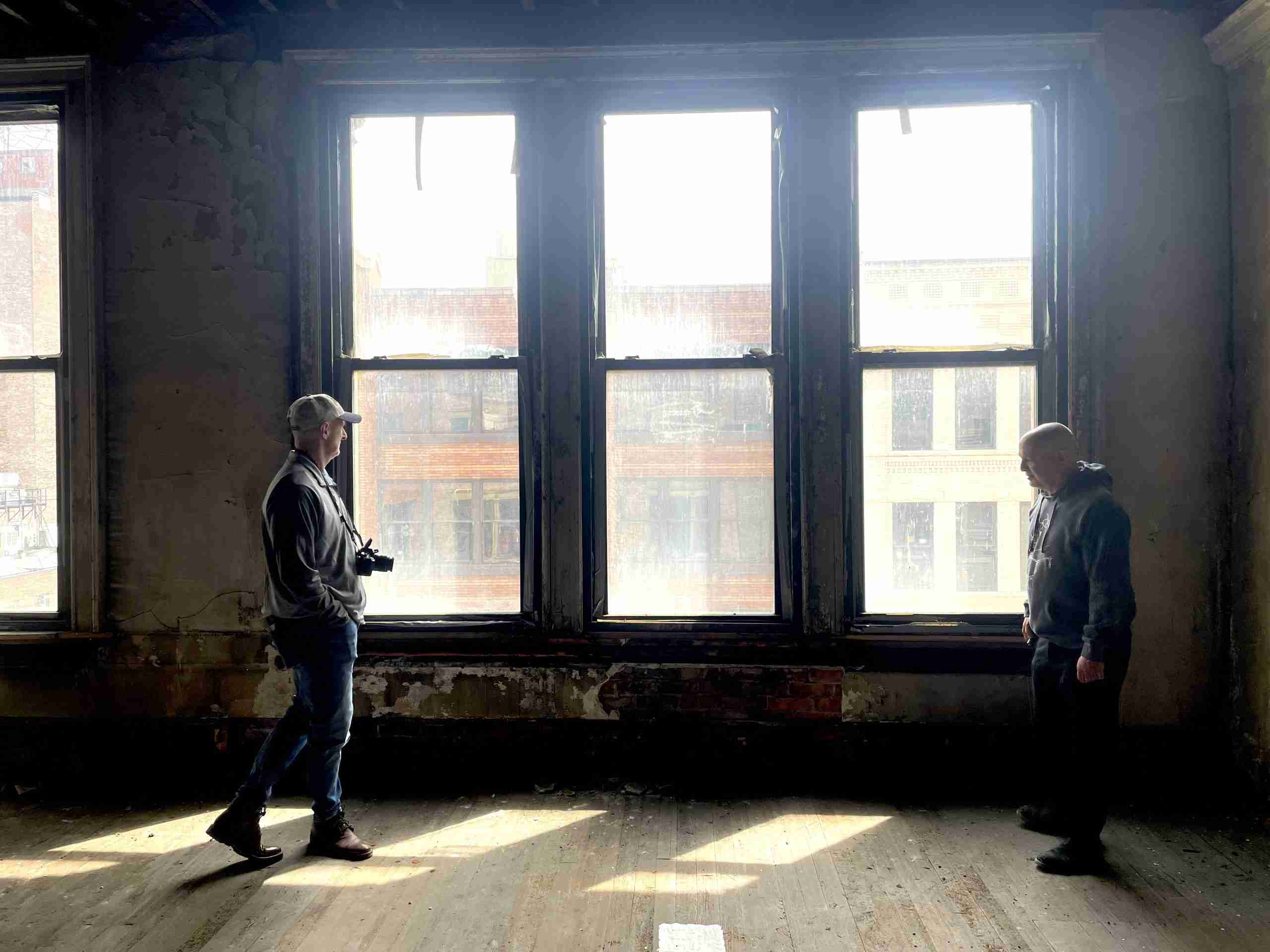
The vacant AM&As building in the heart of downtown is on all preservationists’ watchlists. Others rooting for downtown to be successful should be watching as well. Not only is this a significant building that must be saved, in the process of repurposing it we would see an influx of residents living in the core of the city, not to mention the potential of adding commercial and retail space to help revitalize the area.
According to developer Sam Savarino – the assigned custodian of the building, once the already-approved AM&As project gets the green light, other investments should follow. It’s as if the eyes of the world are on this building, waiting to see what will happen with the ongoing ownership dispute.

I recently toured the AM&As building with Savarino. Surprisingly, the 350,000-ish SF structure seemed to be in better shape than expected. The are certainly some problematic issues that need to be addressed; mainly shoring up the roof,and the wood floors have deteriorated beyond repair. At the same time, the structural elements appear to be fairly solid. But a couple more winters could potentially wreak significant havoc on the structure, so there is little time to waste. Once the water starts seeping into the walls, instead of pooling onto the floors, it’s going to be a different diagnosis. But right now, the water is mainly pooling inside the building, as it migrates through the roof.

AM&As is a tough old building that is doing its best to hold on.
A bit of good news is that in recent years new lightwells have been partially installed, which are actually quite effective at breaking up the building’s large floorplates. Savarino said that the lightwells are of great value, as they are in the center of the building and would offer balcony opportunities for future residential units.
As for the status of the building, there is an owner dispute, which is holding everything up. The ownership is an entanglement that seems almost impossible to navigate. It’s a he said she said sort of mess. That said, Savarino told me that there are a number of financial bridges that must be crossed in order to get the project to the launchpad (potential sale).
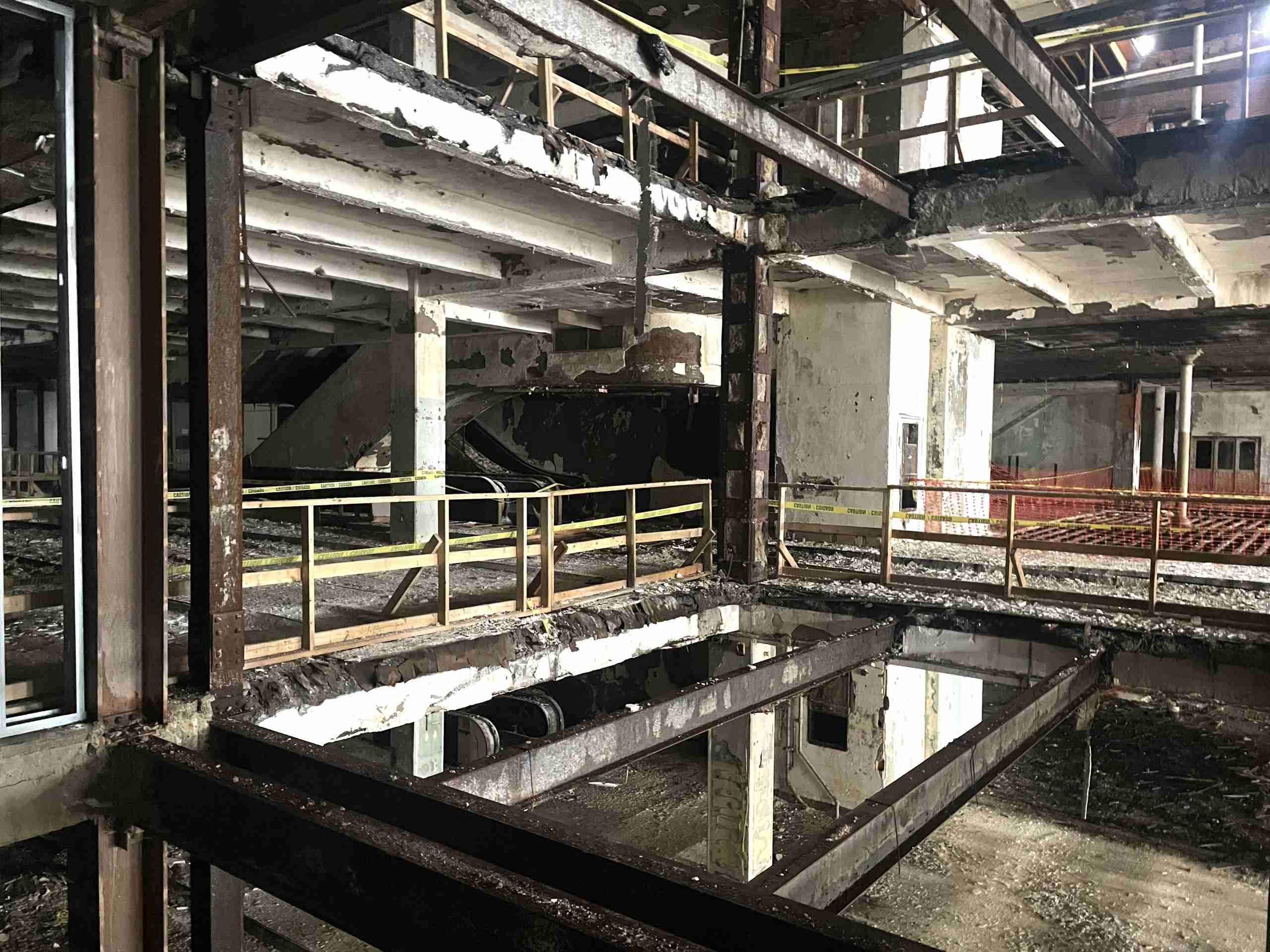

In 2020, 377 Main Realty (defendant) purchased the building from Landco (plaintiff) for $2 million. After the sale, entities affiliated with Landco challenged the sale, setting into motion the entanglement of disputes. At the time, the purchaser received title insurance, which they say validates the transaction. “seller” disagreed. Then, the City put a lien on the building for work done on the compromised vaults that extended under Washington Street – with interest accrued, that amount exceeds $800K. There are also requirements to fill the vaults that extend under Main Street and Eagle Streets, which is anticipated to cost approximately $1.5 million. Before that can take place, the NYS Department of Environmental Conservation is requiring more analysis and testing pertaining to contamination in the basement which consists of water, oil and possible asbestos. That study would be over $100K. The minimum required to remove the contamination would be $500K. If there’s contamination under the basement slabs, that amount increases. Before that study can take place, with work commencing, additional abatement that was not completed by the former owner (basement and stairwells) would have to be addressed amounting to $700K. Roof cutting and patching must be done, costing $300K. And accumulated back taxes to City and County equate to several hundred thousands of dollars. Finally, there was be a reimbursement of around $300K to settle recent custodial repairs implemented by Savarino.
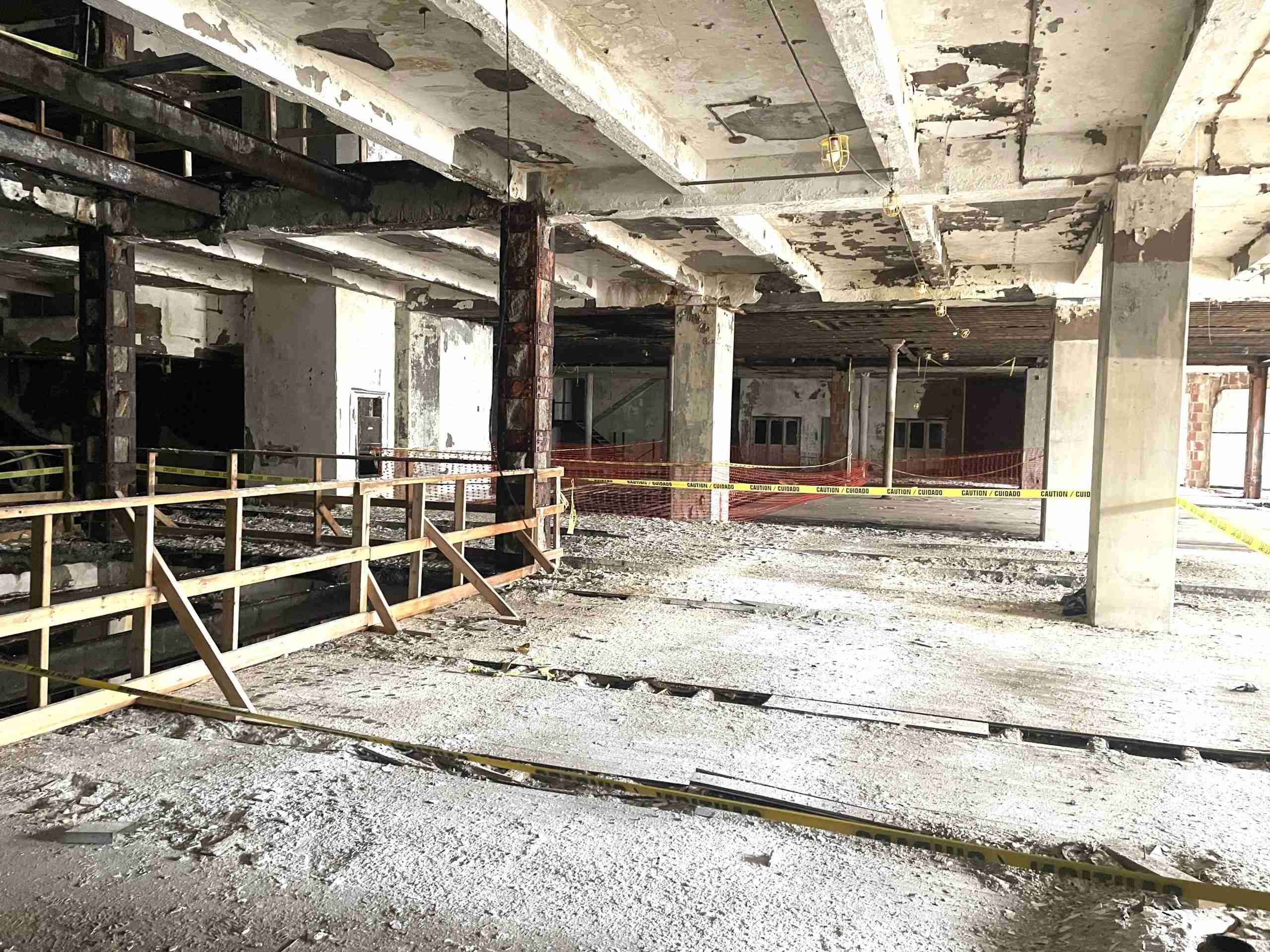
That leads us to figuring out the appraised value of the building, which, Savarino suggested, is subjective. He believes that if all of the aforementioned debts can be settled, a developer can come forward. He himself has previously expressed an interest in tackling the project, so there’s that. To acquire the building, the defendant and the plaintiff would have to agree to a settlement and a sale, which is still a sticky wicket, but not impossible to navigate. The defendant currently has a mortgage, and both the plaintiff and defendant are accumulating legal fees. That amounts to pressure to figure this whole thing out. A trial date has been set for next month.
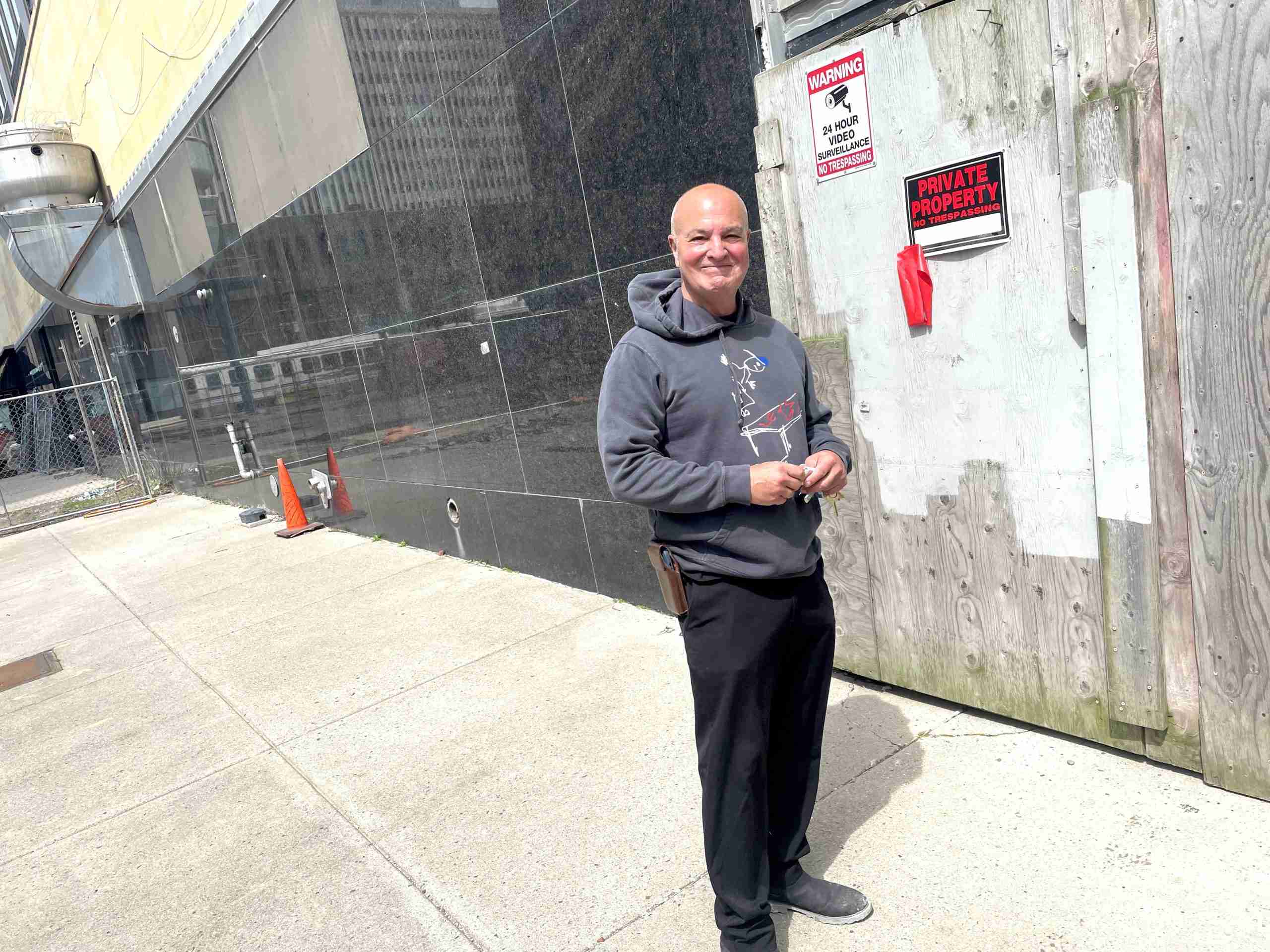
The good news is that the potential White Elephant legislation could be a real boost for an AM&A’s project. Forbearance from the City would also go a long way. Then there are potentially other additional historic and brownfield tax credits available (hello M&T Bank!?). In the general scheme of things, this is still a very doable project if the financial puzzle pieces come together. But the ante for any developer is over $3 million before a purchase price is taken into account. So we shall see.

