
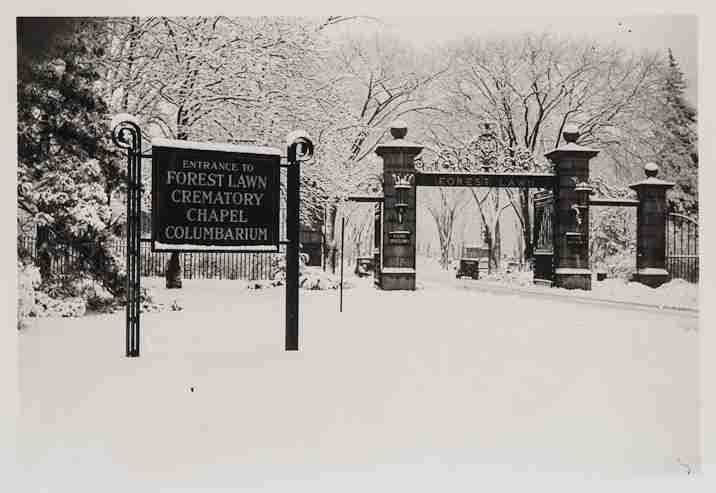
Grave-robbing has been a Buffalo pastime since the start. When the residents of small church-lawn burial-grounds were relocated to Forest Lawn Cemetery in 1851, many skeletons were found to be missing their skulls, which were worth a pretty penny (maybe even a Buffalo nickel) to medical schools and private collectors. But the most famous case of Buffalo body-snatching was in November of 1881.
As the Buffalo News reported:
On Thursday morning Superintendent Troupe, of the cemetery, notified Captain Cable, of Precinct 6, that the grave of [Edward] Burnham had been tampered with and a search had disclosed the body hidden in the Park near the cemetery fence. Under these circumstances it was natural to expect that the captain would capture the ghouls by placing a watch of policemen near the body [but Cable] imprudently drove out to view the body, wearing his full uniform, in broad daylight…
The grave diggers must have been in league with the body-snatchers… No professional (or amateur) resurrectionist would take the body up, carry it over the fence, and then leave it to take the chances of coming for it again. Indications are that some one or more of the grave-diggers “lifted” the body and hid it in the park for the parties who came after it in the evening. These latter chose a very suspicious time for taking the body. They came at 6 o’clock… Captain Cable, who probably thought the crisis would occur at midnight in the regular style, arrived in time to capture the horse and buggy.
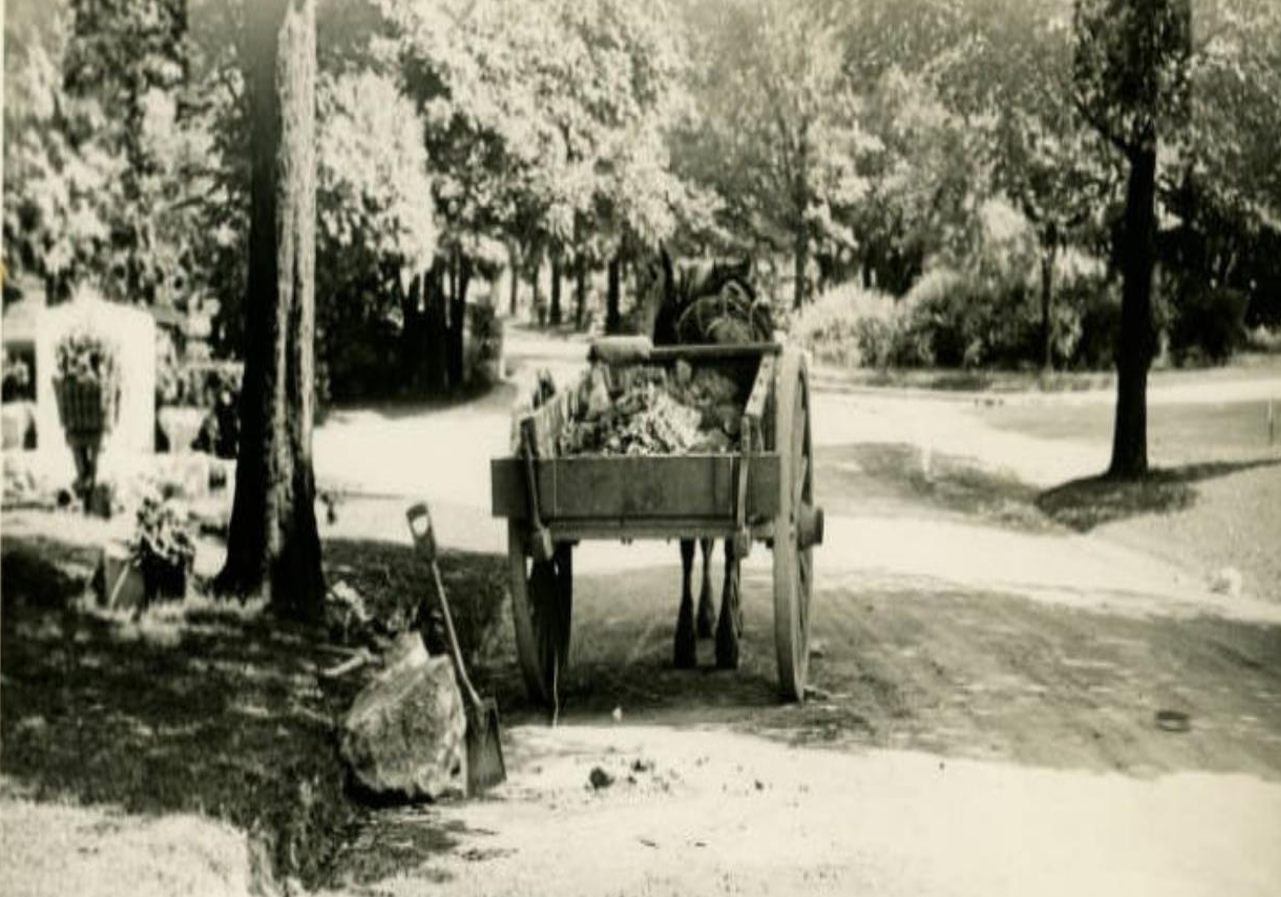
The obvious key-words in the newspaper account are “ghouls” and “resurrectionist,” which convey a spectrum of attitudes toward grave-plundering. But on closer reading, ordinary words become more interesting. For example, that it was “natural” to expect grave-robbers at midnight, the “regular” time for this activity. But it was “suspicious” to drag a dead body around the park at 6 in the evening. The article also seems to think it’s alright to steal a cadaver for religious purposes, but downright sinister to use one for medical research.
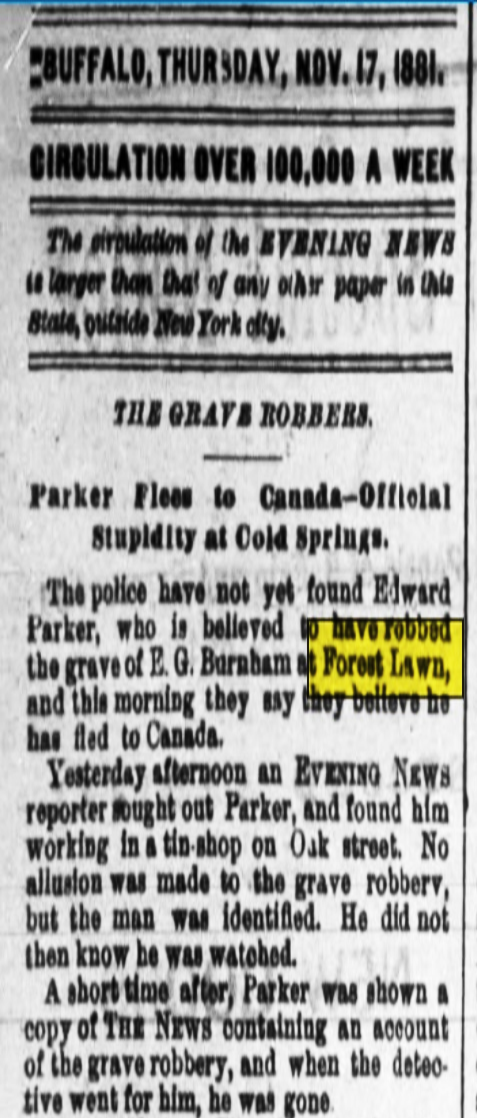
It is rumored that the body was not “lifted” for medical purposes, but on account of religious differences in the family, and that the intention was to rebury him in the consecrated soil of a Catholic cemetery. It is said that this case of body-snatching is not the first that has occurred, and that from time to time graves have been desecrated with impunity in the cemeteries in the neighborhood of Buffalo, and the bodies sold to medical students. Anticipating sudden developments, the medical fraternity are on the defensive… If a raid was made on a certain medical institute, bodies could be found which have been resurrected by ghouls in league with the grave diggers.
– Buffalo News, 17 November 1881.
It turns out, in the case of Burnham, the cause was neither science nor religion, and on closer inspection, the body wasn’t Edward Burnham at all. Further investigation revealed that several prominent Buffalo citizens had secretly bought life-insurance policies on a man named Edward Burnham, and were anxious to collect. The problem was that Burnham vanished. Perhaps he found out about the plan and ran, or swam, for Canada. So the investors went to the medical school and bought a cadaver of his approximate height and build (was this body plundered from some other grave? We’ll never know).
They released the obituary “In this city, on the 7th inst., Edward G. Burnham, aged 28 years. New York papers please copy.” After the bogus body was buried, one insurance company paid out but several others became suspicious, and ordered that the cadaver be exhumed for identity confirmation. It was then somehow decided that a miraculous empty tomb might reassure the shaken faith of the insurers.
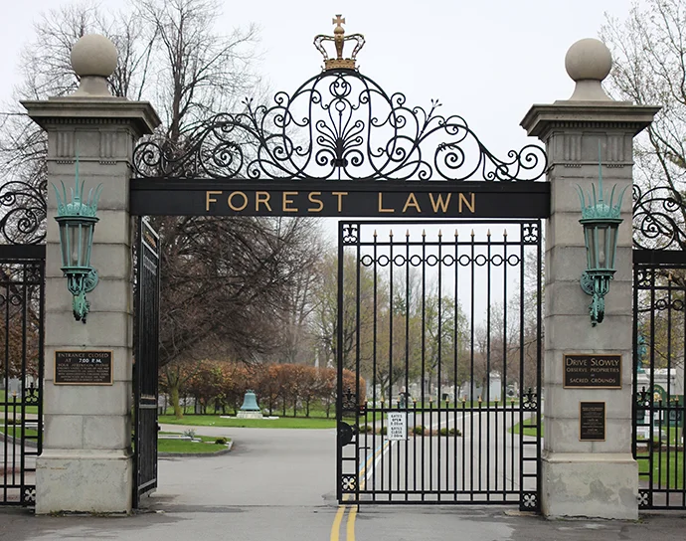
The bungling body-snatchers and buffoonish fraudsters were eventually rounded up. The monument to commemorate their effort is the iron gate around Forest Lawn cemetery, built in 1885 to reassure mourners that Forest Lawn is a permanent residence.
The crime took place in November, during the first deep freeze of the season, the silliest time of year to go digging up graves. But it seems most appropriate to unearth this story on either Easter or April Fools’ Day (although the story is neither supernatural nor spurious – this is actual Buffalo History). In this season of mirth and rebirth, we could all benefit from some grave humor.