
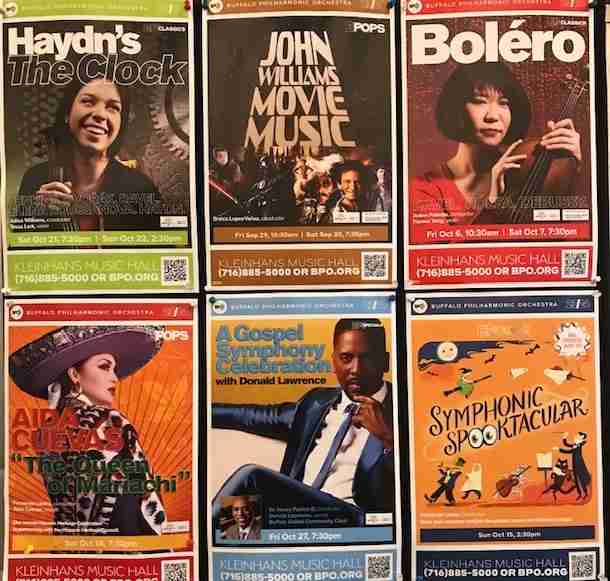
An old ad campaign for recording tape (kids, ask your parents) had the tagline “Is it live? Or is it Memorex?” obviously touting “live” as the gold standard of audio enjoyment. This Friday morning, in a concert to be repeated Saturday night, October 7, 2023 at 7:30 pm, the BPO made yet another solid case for “live” versus “Memorex.” And it all started with French composer Maurice Ravel’s “Morning Song of the Jester” (Alborada del gracioso) music with Spanish influence.
It’s a 7-minute proof if you needed one, that Ravel was a master of orchestration, meaning choosing just the right instruments to play at just the right moments. And he added a lot of instruments, including enough percussion toys to need 6 percussionists, plus tympani. It starts quietly, with the string players plucking instead of bowing, and by the end explodes with sound as musical colors cascade over the stage and into the seats. Along the way, though, there’s something special. It’s an extended solo for bassoon and, as played by Principal Bassoonist Glenn Einschlag, sounded so sweet that I overheard an audience member ask “Is that an English Horn?” presumably thinking of that beautiful, mournful instrument that we hear in the middle of the Concierto de Aranjuez for guitar. I don’t recall ever hearing a bassoon sound so gorgeous.
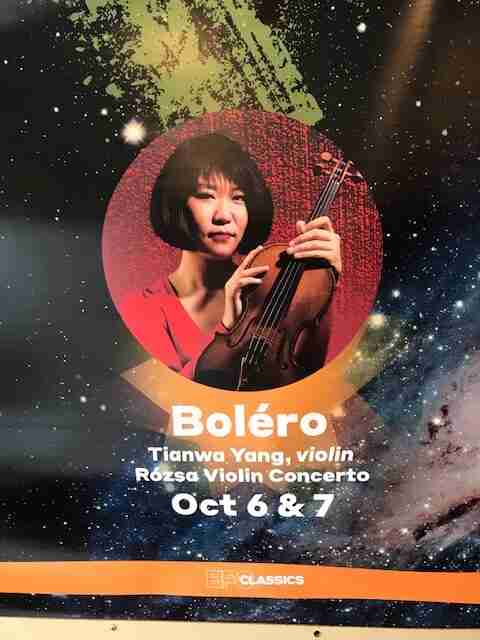
Then it was on to a violin concerto, featuring Tianwa Yang, a favorite of radio station WNED Classical. Ms. Yang has made a number of recordings of music by Pablo de Sarasate (“the Spanish Paganini”) and she knows her way around a fiddle. Good thing, because the exciting 1953 Violin Concerto by Hungarian émigré (known to many as a Hollywood composer) Miklós Rózsa was all over the fingerboard. Why compose a concerto so difficult? Because it was written for the great violinist Jascha Heifetz. Back in the day, the name “Heifetz” was synonymous with “the best.” Heifetz knew that and he wanted a concerto that would set everyone on their back feet. And he got it. Of course, most of us had never heard it before this performance, but many of you may have heard the 1939 Violin Concerto by American composer Samuel Barber and you may recall how that begins with undulating waves of beautiful sound that seem to buoy the violin along. That’s how the Miklós Rózsa concerto begins. Gorgeous. And you may recall how the Barber ends, with a fiendishly difficult perpetual motion presto. That’s how the Rózsa ends, Allegro Vivace.
As I mentioned in my last review, some value the violins of Guarneri del Gesu more highly than Strads. We got to hear a rare 1730 del Gesu on loan from the Rin Collection in Singapore. And, we got an encore, the Andante movement from Bach’s Sonata No. 2 in A minor for solo violin. (I didn’t recognize it, but BPO violist Janz Castelo told me later what it was.) Much quieter and more contemplative than the Rózsa, it’s also a showpiece with a gorgeous melody harmonized by the violinist herself. Don’t ask me how she did that, but the effect was quite moving. One audience member shouted what we all were thinking: “THANK YOU!”
After intermission, we heard the three-movement Iberia (Spain) section of Claude Debussy’s Images. Using an enormous orchestra including three bassoons (when’s the last time you saw THAT?) plus contrabassoon, 5 percussionists plus tympani, two flutes plus two piccolos, and three clarinets, in other words, just a lot of extra firepower for a swirl of sound. But the best part was the middle movement “The perfumes of the night” which was mysterious and evocative. I thought of Lillian Moore’s poem “I Like Night” which goes like this: I like the quiet breathing of the night, the tree talk, the wind-swish, the star light. Day is glare-y loud scary. Day bustles. Night rustles. I like night.”
And the concert ended with an audience favorite, Ravel’s Bolero a 14-minute long trip through the orchestra, combining instruments in new ways to create new sounds. Now THAT’S orchestration. It’s almost as if Ravel were saying “Look, I’m going to use the same rhythm and the exact same melody and I’ll never change either of them and yet for 14 minutes everything will continue to sound fresh and new. Here, hold my sangria and watch this.” When I used to have a weekday request show on WNED Classical Ravel’s Bolero was one of the most often requested pieces. So I thought I “knew” it pretty well. Hearing it live this time was like hearing it for the first time. If it’s been a while for you too, I hope that you get to hear it with the BPO and Kleinhans this weekend.
WHAT’S NEXT:
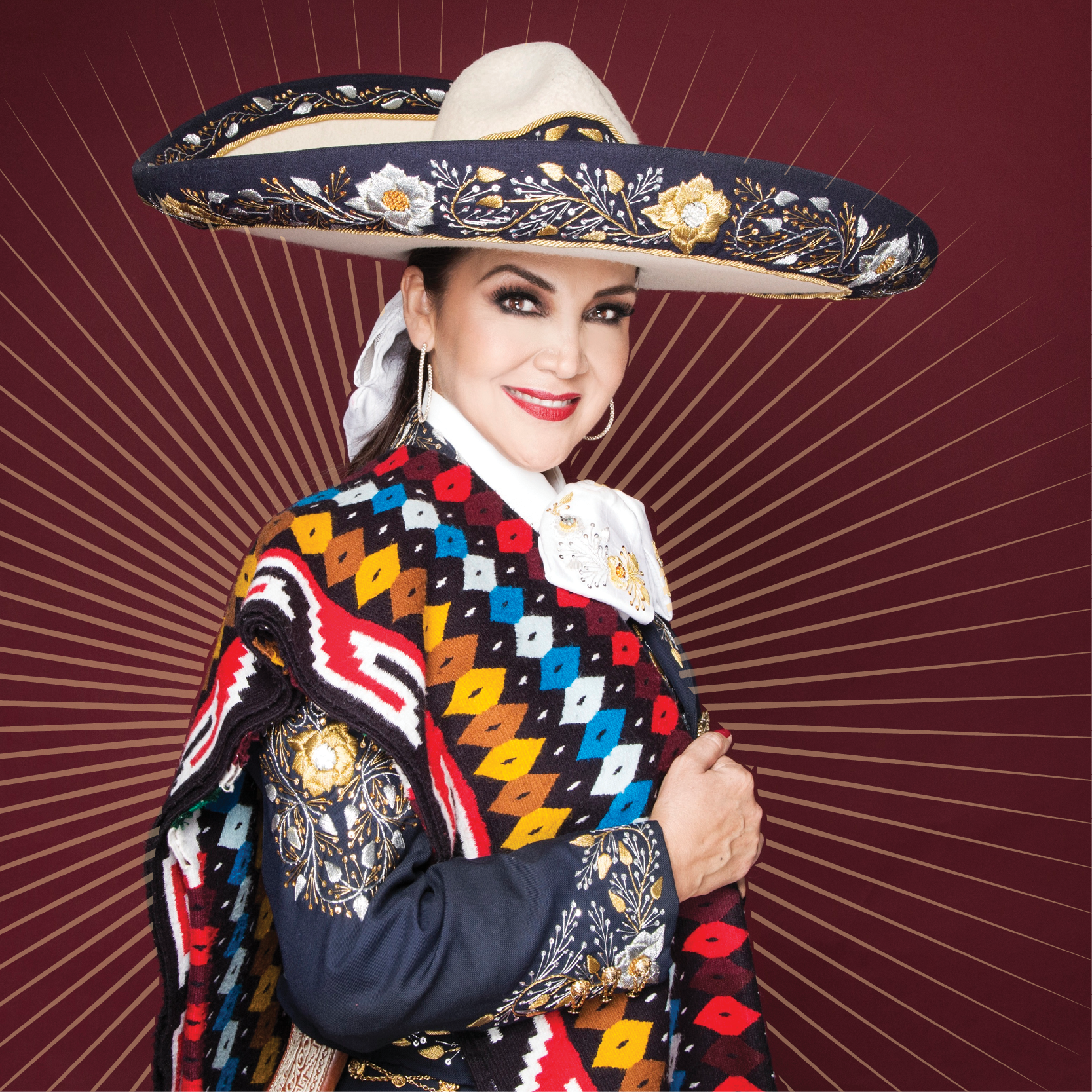
Just in time for Hispanic Heritage Month, one night only, Sunday, October 14 at 7:30 pm Argentinian conductor Fernanda Lastra will conduct another BPO Pops concert with Mexico’s master of the mariachi art song, singer Aida Cuevas “The Queen of Mariachi.”
And the first of the BPO Kids Series, the “Symphonic Spooktacular,” is next Sunday afternoon, October 15 at 2:30 pm. Through their Family Series Accessibility Initiative, Kids Series tickets that used to cost from $9 to $24 are now a flat $7 per ticket (and that includes adults attending the Kids Series) and they’ve eliminated the $5 parking charge for Family Concerts. If the kids want to, they can wear their Halloween costumes (the musicians will be wearing theirs) and they join the parade across the Kleinhans stage. And, supports have been added for families with children who have disabilities or are on the autism spectrum. Call the box office at 716-885-5000 or visit bpo.org for more details.

On Saturday night October 21 and Sunday afternoon October 22, Julius Williams finally (the man has been everywhere) makes his BPO conducting debut leading Haydn’s “The Clock” symphony and violinist Tessa Lark’s returns to Buffalo to play Dvořák’s lovely Romance and Ravel’s gypsy-inspired Tzigan. The program also features the turn-of-the-century Rhapsodic Overture by African American composer Edmund Thornton Jenkins, and the inspirational Moments of Arrival by Elena Roussanova. You can hear Maestro Williams conduct the Moscow Conservatory Orchestra in the world premiere of that work here.
After every Saturday night concert you’re invited to a “Musicians Nightcap.” How that? You wander downstairs to Kleinhans’ lower level after Saturday’s performance for light conversations with BPO musicians and complimentary wine and bites, all hosted by BPO double bassist Jonathan Borden. This special event is FREE and open to all who attend Saturday’s concert. So don’t be shy. This is your chance to chat and ask anything you want to.

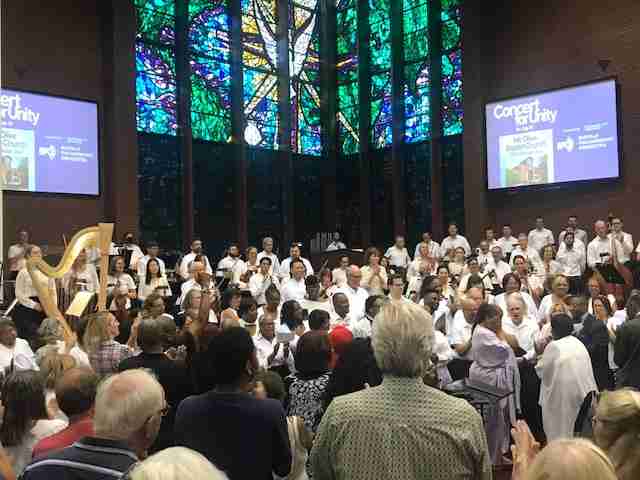
Then, it’s “A Gospel Symphony Celebration with Donald Lawrence” songwriter, producer, and recording artist. Lawrence, a multiple Grammy and (Gospel Music) Stellar Award winner will join the BPO and the voices of the Buffalo United Community Choir, whom we heard at the Concert for Unity a few months back at the Mt. Olive Baptist Church on Delavan Avenue (see inset photo). They’ll perform under the baton of the equally accomplished composer, orchestrator, and educator, Dr. Henry Panion III for an evening planned with a dozen Gospel songs, including Ride on King Jesus, Presence of the Lord, and The Blessing of Abraham. That’s one night only On Friday, October 27, at 7:30.
Kleinhans Music Hall is at “3 Symphony Circle” Buffalo, 14201 where Porter Avenue, Richmond Avenue, North Street and Wadsworth meet at a traffic circle. Visit www.bpo.org or call 716-885-5000. Full-service bar in the lobby or across the lobby in the Mary Seaton Room. Masks are optional.